WhatsApp

Getting Colour and Odour Out of Methoxy Naphthalene
This is one of our own catalogued products rather than a client engagement, so the process reasoning behind it can be published. The discipline is the same one we apply to custom synthesis, where the molecule belongs to the client and the write-up would not be ours to share.
An assay is not the specification
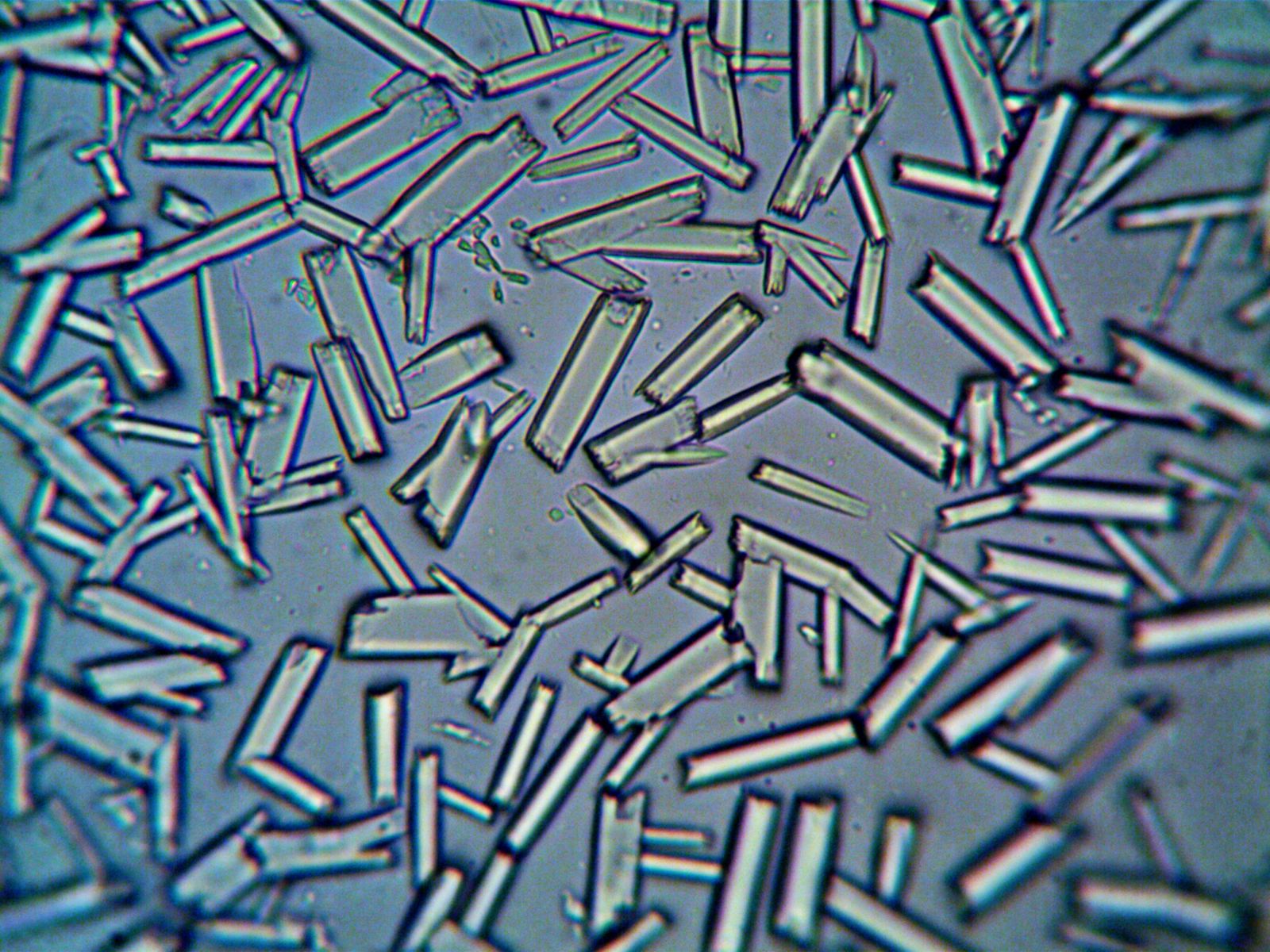
2-Methoxynaphthalene, sold in the fragrance trade as Nerolin Yara Yara, is a white crystalline solid with a clean orange-blossom character. It goes into fine fragrance, into soap and detergent perfumery, and it is also an intermediate in its own right.
We supply it at ninety-eight percent, and that figure is the least interesting thing about the specification.
A buyer of an aroma chemical assesses it in a particular order. They look at it, they smell it, and then they read the certificate. Material that is faintly pink, or that carries a phenolic note underneath the floral one, is rejected before the assay is considered, and no amount of purity on paper recovers that conversation. The remaining two percent is what the customer is actually buying.
Where the colour and the odour come from
Both trace back to the same place.
The compound is made by methylating 2-naphthol. Whatever 2-naphthol survives unmethylated stays in the product, and it does two things there. It has a distinct phenolic, faintly tarry odour that sits underneath the floral note and does not belong. And it oxidises readily in air, particularly in the presence of trace iron and under alkaline conditions, into coloured quinone-type species.
This is why the colour problem is so often misdiagnosed. A batch leaves the plant white and arrives pink. Nothing went wrong in transit. The colour bodies were not present at dispatch; their precursor was, and it did what phenols do.
There is a second, smaller contributor. Methylation is not perfectly regioselective, and a little 1-methoxynaphthalene can form. It is odour-active in its own right and its character is not the one being sold. It also boils close enough to the product that distillation separates the two poorly.
So the specification reduces to a single question: how little unreacted 2-naphthol can be left, and how reliably.
The approach
Four controls, applied in order, each fixed as a written condition with a tolerance rather than as a target.
- Feed quality first. 2-Naphthol that has already begun to oxidise brings its colour with it into the reaction, and nothing downstream removes it cleanly. The feed is checked on appearance and on melting range before it is charged, which sounds trivial and is the cheapest control in the sequence.
- Drive the methylation to completion rather than to a good yield. The temptation on a methylation is to stop when conversion is acceptable and take the yield. Here the last one percent of conversion is worth more than the yield it costs, because the residual naphthol is the entire problem. The alkali charge, the addition profile and the hold time are set on that basis.
- Alkaline wash on the crude. Unreacted 2-naphthol is acidic; the product is an ether and is not. A caustic wash exploits that difference directly and removes the bulk of the residual phenol into the aqueous phase, where it can be recovered rather than discarded.
- Crystallisation as the finishing step, not distillation. This was the decision that mattered most.
Why crystallisation rather than distillation
Distillation is the reflex for an organic of this volatility, and it is the wrong reflex here for three reasons.
The isomer boils too close to the product to be rejected efficiently. Prolonged heat with residual alkali and trace phenol is precisely the condition under which colour bodies form, so the purification step generates the defect it is meant to remove. And a distilled product solidifies from the melt into a mass with no defined crystal habit, which the trade dislikes and which cakes in the drum.
Crystallisation from solvent rejects the isomer on a different principle, one it is actually good at, and it does so at a temperature where nothing oxidises. It also delivers a free-flowing white crystalline solid, which is the physical form the specification describes.
The controls that matter within the crystallisation are the usual ones and they matter here more than usual: cooling rate, seeding, and the temperature at which the mother liquor is separated. Cool too quickly and impurity is occluded inside the crystals, where washing cannot reach it, and the assay looks fine while the odour does not.
The outcome
The product is a catalogued line, supplied at ninety-eight percent as a white crystalline solid, and the colour stability on storage was the specific thing the programme set out to fix.
We have not published a residual naphthol figure here. The number depends on the feed and on the campaign, and a single value quoted without either would invite comparison against a figure someone else generated on a different method. If a customer needs a limit written into their specification, we would rather agree it against their own method and hold it.
What the programme taught us
The first lesson is one we now apply to every aroma and fine chemical enquiry: find out what the customer actually judges the material on before optimising anything. For this product the answer was colour on arrival, not assay on dispatch, and that reordered the entire development.
The second is that a trace impurity with a functional group unlike the product is a gift. The phenol was acidic and the product was not, which meant a simple wash could do most of the work. Looking for that difference early is worth more than a clever purification designed later.
Purification and standardisation, custom synthesis, and specification work on aroma and fine chemicals are service lines we run, and this compound is one of our own. If you have a material that meets its assay and still comes back from your customer, the cause is usually in the two percent, and that is a tractable place to look.
Written by

Dr. Vaibhav R. Acham
Founder & Managing Director
Dr. Acham holds a Ph.D. in Chemistry with expertise in heterogeneous catalyst development and application, having researched at CSIR-National Chemical Laboratory in Pune and Humboldt University in Berlin. He brings over fifteen years of industrial R&D experience across specialty chemicals, pyridine chemistry, and food-safety analysis, spanning laboratory establishment, catalyst development, and process scale-up.