WhatsApp

Turning an Iron Waste Stream into a Pigment Line
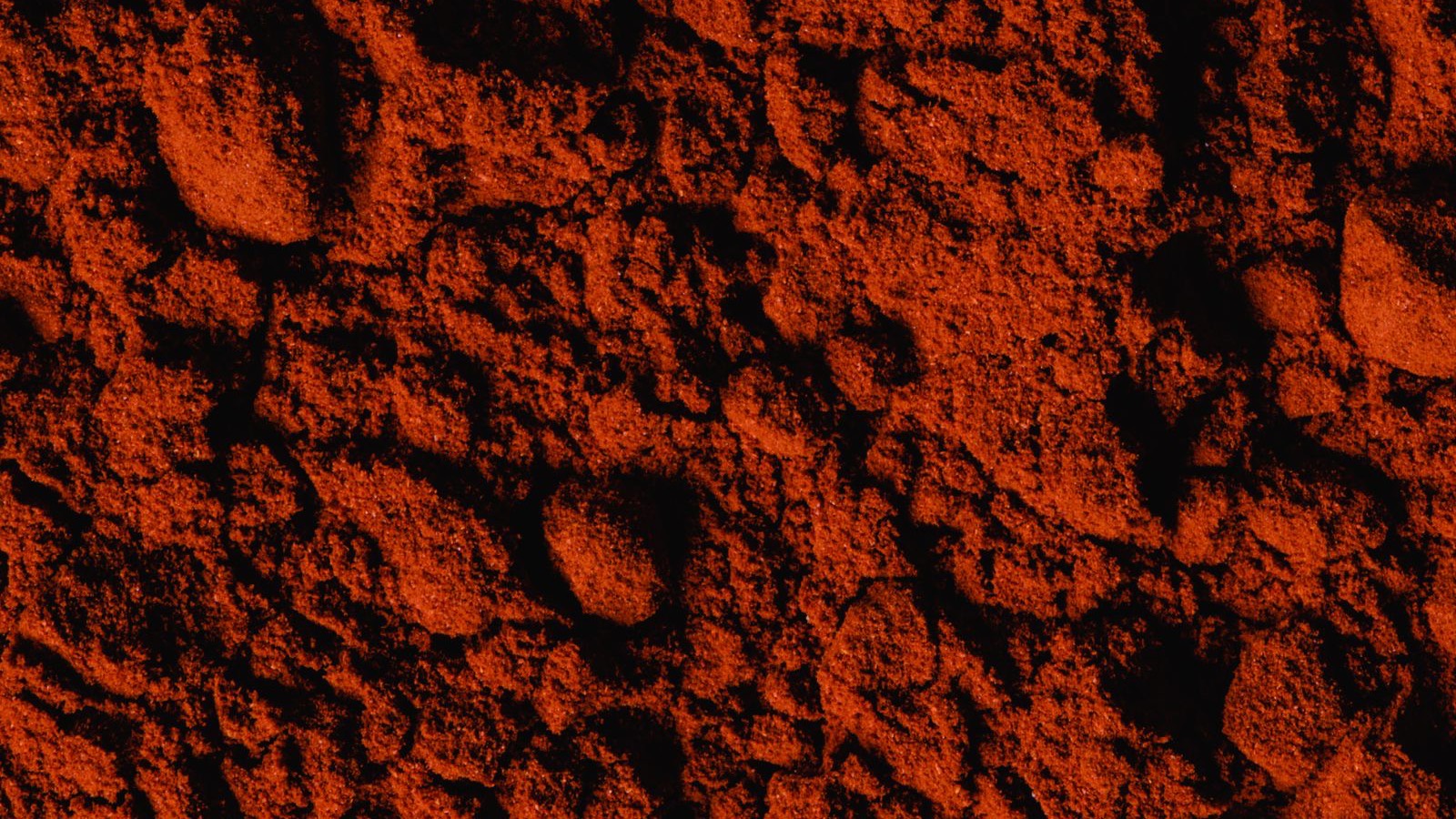
This is one of our own development programmes rather than a client engagement, which is why we are able to describe it in full. No confidential information is involved, and the outcome is a product line we now supply.
The challenge
Iron-bearing waste streams are common and awkward. Pickling liquor, spent etchant, mill scale, and process residues all carry iron in quantity, and for most plants they are a line item on the disposal side of the ledger rather than anything else. The iron is not contaminated in any interesting way. It is simply in the wrong form, in the wrong place, mixed with acid or with whatever else the process put there.
Meanwhile, synthetic iron oxide pigment is bought and used in volume across paint, coatings, concrete, and construction products. It is the same element, in a form somebody pays for.
The gap between those two facts is not chemistry. Precipitating iron oxide from an iron solution is undergraduate work. The gap is specification. A pigment is not judged on its iron content. It is judged on colour strength, shade consistency between batches, particle size, oil absorption, and how it behaves in the medium it goes into. A recovered material that varies from batch to batch is not a pigment, whatever the assay says.
The approach
The programme worked backwards from the specification rather than forwards from the waste.
The route itself is dissolution followed by controlled precipitation and calcination. What determines whether the product is saleable is the control applied at each stage:
- Feed conditioning. The waste is characterised before anything is done to it, because the other metals present are what limit the achievable shade. Iron oxide tolerates some impurity; it does not tolerate an inconsistent one.
- Precipitation conditions. pH, temperature, addition rate, and the seed present at nucleation set the particle size and habit, and therefore the colour. This is the step where a shade is made or lost, and it is the step most sensitive to being scaled without thought, since local pH near an addition point in a fifty litre reactor is not the pH on the meter.
- Washing. Residual soluble salt is the difference between a pigment that performs in cement and one that blooms.
- Thermal treatment. Calcination temperature and time set the final phase and the final shade.
Each of those was fixed as a written condition with a tolerance around it, not as a target, because reproducibility was the deliverable.
Three shades, three different compounds
The most useful thing the programme established is something a buyer often does not realise: the three pigment shades are chemically distinct materials, not one base with colourants added.
- Red is anhydrous ferric oxide, Fe2O3.
- Yellow is the hydrated oxide, FeO(OH).
- Black is magnetite, Fe3O4, in which iron is present in two oxidation states.
That distinction has a direct consequence in service. The yellow loses its water of hydration above roughly 180 degrees Celsius and shifts towards red. In a paint film or a concrete mix that never happens, and the yellow is entirely stable. In anything fired, it is the wrong choice, and no amount of quality control on our side changes that. We tell customers this before they order rather than after.
All three are inorganic, lightfast, and alkali-stable, which is why they hold their colour in cement where organic pigments fade. That stability is the reason the market for them exists.
The outcome
The recovery route is established and the pigments are a catalogued product line, supplied in the three shades. The material is made from recovered iron rather than mined ore, which is where our waste-to-value work meets the product catalogue directly.
We have deliberately not published a recovery percentage or a tonnage here. Those figures depend heavily on the feed a given stream provides, and quoting a number from one campaign as though it were general would be misleading.
What the programme taught us
Two things, both of which we now apply to recovery work generally.
The first is that recovery projects are specification projects. Getting the metal out of the stream is usually the easy part and is often solved in the first fortnight. Getting it out in a form that meets a purchase specification, batch after batch, from a feed that varies, is the programme. Anyone scoping a recovery project on the basis of the extraction chemistry alone is scoping the small half of it.
The second is that the waste stream has to be characterised as carefully as a raw material, because that is what it now is. The impurities in it set the ceiling on what the recovered product can be sold as, and knowing that ceiling early prevents a great deal of wasted development.
We run recovery technology design as a service line, and we have taken the same approach to lithium-ion black mass, copper from electronics scrap, and silica from rice husk. If you have a stream you are currently paying to dispose of, the first question worth answering is what the material in it would have to meet to be worth something.
Written by

Dr. Babita A. Kale
R&D Manager
Dr. Kale directs the R&D team at ChemEngg Research, with project work running across metal recovery from lithium-ion battery black mass, iron oxide pigment synthesis, nanostructured silver and copper materials, and sodium-ion cathode development. She holds a Ph.D. in Chemistry from the University of Pune and spent eleven years teaching analytical chemistry before moving to industry. She is a certified lead auditor for both ISO 9001:2015 and ISO/IEC 17025:2017, which is what keeps laboratory practice and documentation aligned with the standards clients audit against.