WhatsApp

Recovering Lithium and Cobalt from Spent Battery Black Mass
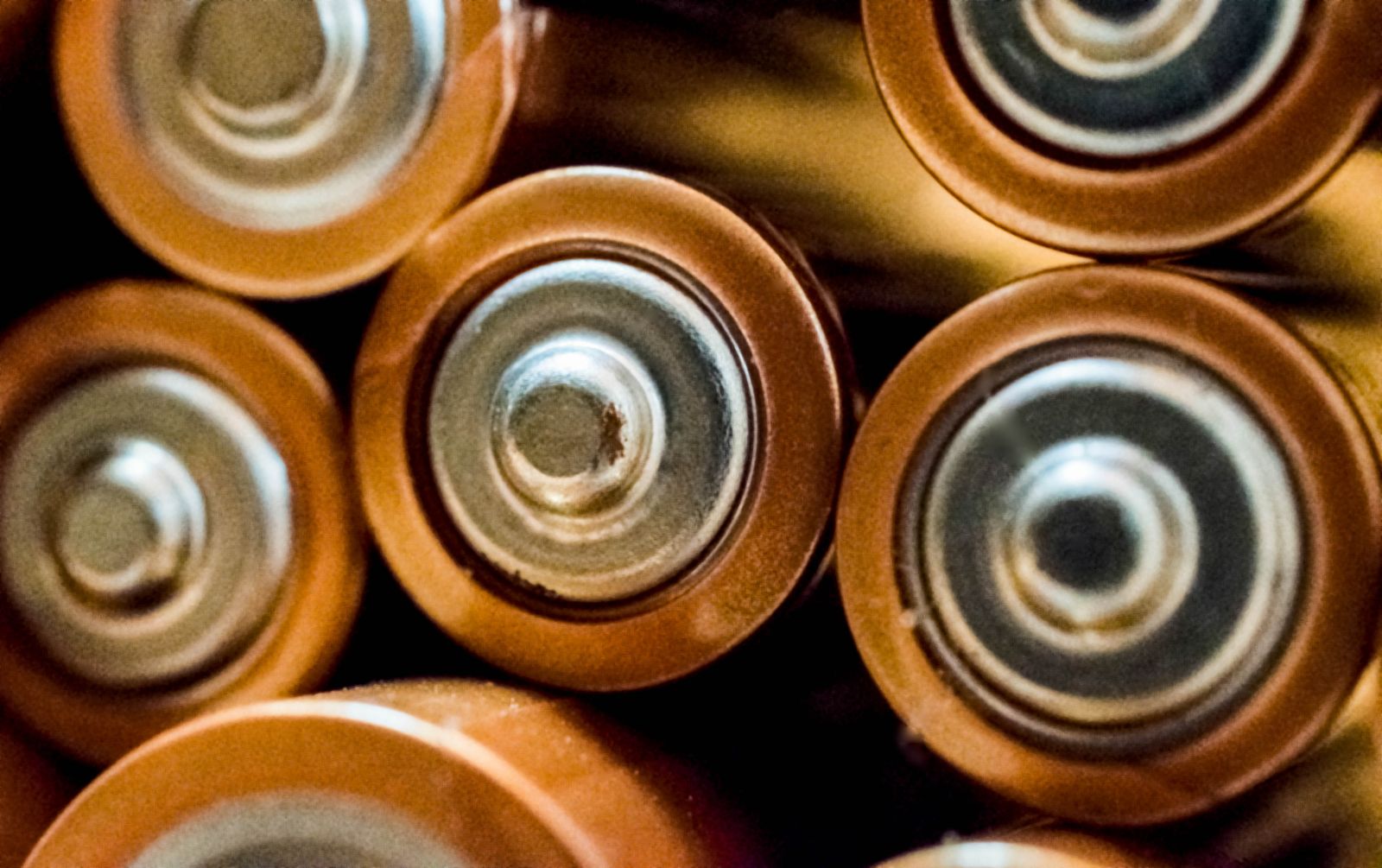
This is one of our own development programmes rather than a client engagement, so the process reasoning can be described openly. We have written before about recovering iron from a waste stream and copper from electronics scrap. Black mass belongs to the same family of problems and is comfortably the hardest of the three.
Black mass is not an ore
Discharge a spent lithium-ion cell, shred it, and separate out the casing, the current-collector foils, and the separator. What remains is a dark powder the industry calls black mass. It carries the cathode and anode material together: lithium, nickel, cobalt and manganese, a large quantity of graphite, and whatever binder and electrolyte residue survived the shredding.
The grades look extraordinary next to anything that comes out of the ground, and that invites a comparison with ore processing which quietly costs recovery projects a great deal of time.
An ore is geologically consistent. A given deposit hands you much the same mineralogy for years, so a flowsheet designed against it stays correct. Black mass is a manufactured material whose composition is decided by whichever cells were in the collection batch. A nickel-manganese-cobalt feed and an iron-phosphate feed are chemically different problems, and a mixed feed is a third problem rather than an average of the first two. Iron phosphate cells carry almost no nickel or cobalt at all, which means the two metals that pay for the process are absent, while their phosphate reports into the leach and interferes with everything downstream of it.
The feed varies. That single fact governs the flowsheet, and it is the thing most feasibility studies assume away.
The leach is not where the difficulty is
Dissolving black mass is undergraduate chemistry. Sulphuric acid with a reductant, usually hydrogen peroxide, will take nickel, cobalt, manganese and lithium into solution readily enough, because the reductant drops cobalt and manganese out of their higher oxidation states and into forms that dissolve.
Anyone can get better than ninety percent of the metal into solution in a week of bench work. The programme is everything that happens afterwards.
Once the metals are in solution you are holding a mixed sulphate liquor containing four metals you want, plus aluminium, copper, iron and fluoride you do not, at concentrations that shift with the feed. Separating four chemically similar transition metals from one another, to a purity a cathode manufacturer will accept, is the actual work. It is also where the reagent bill and the effluent load are set.
The approach
We worked backwards from the specification, as we do on every recovery programme.
- Feed characterisation first. Every batch is analysed before anything is done to it. Not as a formality: the nickel to cobalt to manganese ratio, the lithium content, the residual aluminium and copper, and the fluoride all change what the flowsheet has to do. A programme that characterises the feed once, at the start, is designing against a fiction.
- Graphite removal before leaching, not after. Graphite does not dissolve, it filters badly, and it carries value of its own. Taking it out early makes every subsequent solid-liquid separation faster and gives a second saleable stream instead of a filter cake to dispose of.
- Impurity removal in a fixed order. Iron, aluminium and copper come out before any attempt at the valuable metals, by pH-controlled precipitation and cementation. Trying to shortcut this is the most common way a liquor becomes unrecoverable, because a co-precipitated impurity takes cobalt down with it.
- Solvent extraction for the separation. Manganese, then cobalt, then nickel, each on its own extractant at its own equilibrium pH. This is the stage that decides purity, and it is the stage that has to be developed against the real liquor rather than a synthetic one.
- Lithium last, from the raffinate. Lithium stays in solution throughout and is recovered at the end as carbonate. It is the metal most often written off in a first-pass flowsheet, and in an iron-phosphate feed it is close to the only thing worth having.
Fluoride is the impurity nobody budgets for
The electrolyte salt in a lithium-ion cell is generally lithium hexafluorophosphate. It hydrolyses in the presence of moisture and produces hydrogen fluoride.
This has three consequences that arrive together. It dictates materials of construction, because dilute hydrofluoric acid in a warm leach will attack glass and a good many stainless grades. It creates a genuine handling hazard for operators, which has to be designed for at the bench and not discovered at pilot scale. And fluoride follows the liquor through the process, where it complexes metals and quietly degrades solvent-extraction performance in ways easily misread as an extractant problem.
Any black mass flowsheet that has not stated explicitly how it deals with fluoride has not been finished.
The outcome
The route is established at bench scale across several feed types, with the separation train developed against real liquors rather than made-up ones. We are treating it as an active research line rather than a service we have run a hundred times, and we would rather say so than imply otherwise.
We have deliberately not published a recovery percentage here. Recovery from black mass depends so heavily on the cell chemistry in the batch that a single figure, quoted without the feed it came from, would be close to meaningless and would invite comparison with numbers generated on quite different material.
What the programme taught us
The first lesson repeats one we drew from the iron oxide work: recovery projects are separation and specification projects. Dissolution is rarely the constraint. The constraint is delivering a salt that a cathode manufacturer will accept, from a feed that changed last month.
The second is more specific to this material. Feed variability has to be an input to the design rather than a nuisance discovered during commissioning. A flowsheet built around one cell chemistry will be obsolete when the collection stream shifts, and it will shift, because it reflects what was sold into the market eight to twelve years ago rather than what is being sold today.
Hydrometallurgical recovery, solvent extraction development, and recovery technology design are service lines we run, and this programme sits inside them. If you are holding a stream you currently pay to dispose of, the first question worth answering is not how much metal is in it. It is what that metal would have to meet, in what form, before anyone would buy it.
Written by
Dr. Babita A. Kale
R&D Manager
Dr. Kale directs the R&D team at ChemEngg Research, with project work running across metal recovery from lithium-ion battery black mass, iron oxide pigment synthesis, nanostructured silver and copper materials, and sodium-ion cathode development. She holds a Ph.D. in Chemistry from the University of Pune and spent eleven years teaching analytical chemistry before moving to industry. She is a certified lead auditor for both ISO 9001:2015 and ISO/IEC 17025:2017, which is what keeps laboratory practice and documentation aligned with the standards clients audit against.