WhatsApp

Holding an Agrochemical Intermediate to a Consistent Assay
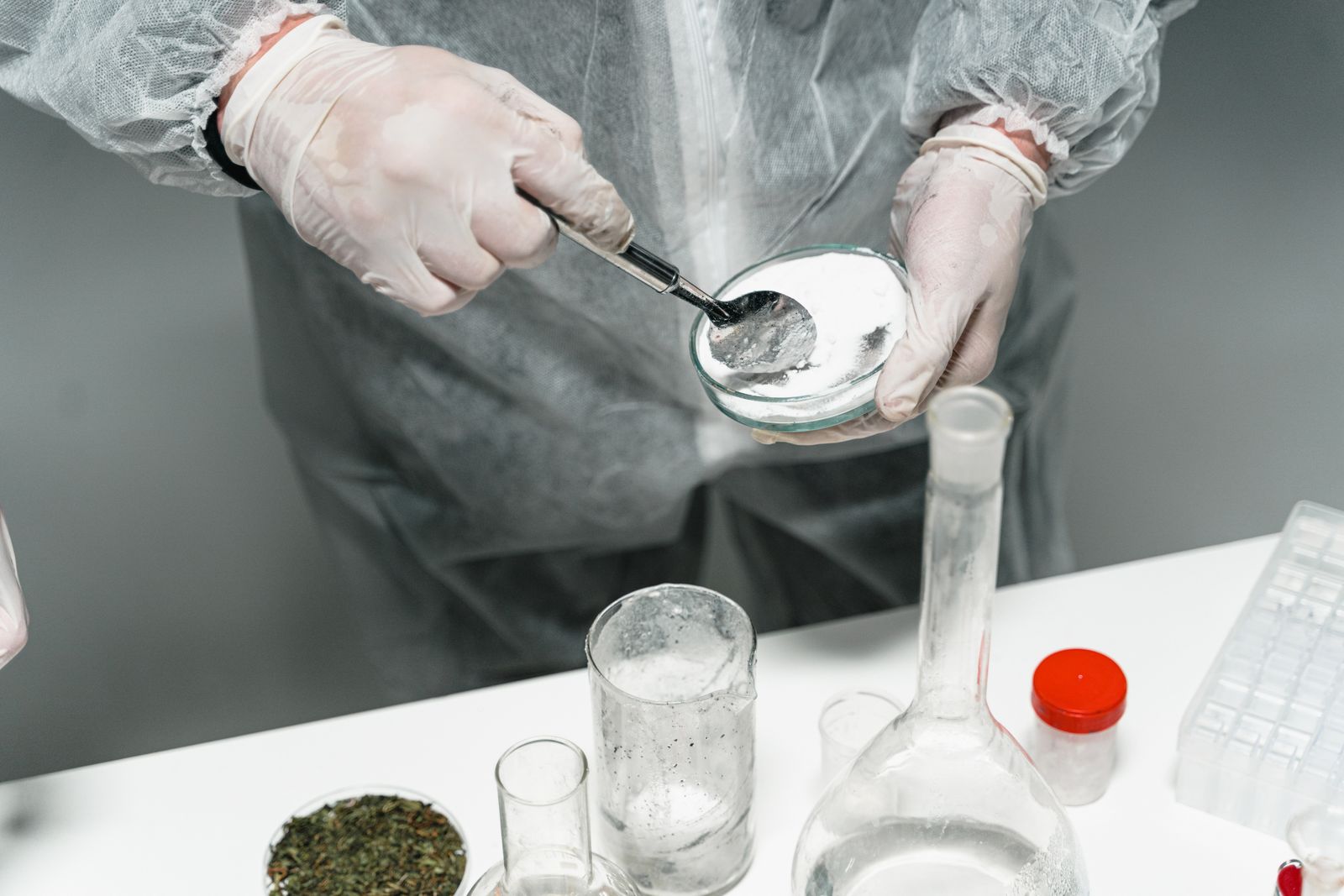
This is one of our own products rather than a client engagement, so the process reasoning behind it can be described openly. The discipline set out here is the same one we bring to custom synthesis work, where the molecule belongs to the client and the write-up would not be ours to publish.
The challenge
2-Chloroacetamide is a building block. It goes into agrochemicals, into dyes, and into preservative formulations, and in every one of those it is charged into somebody else's reaction rather than used as it stands.
That changes what quality means. A customer buying a finished product cares what is in the drum. A customer buying an intermediate cares what happens three steps later, which makes two things matter more than the headline assay:
Consistency between batches. A charge is calculated on an assumed assay. If the assay moves by two points between deliveries and nobody adjusts, the downstream stoichiometry moves with it, and the yield loss shows up in their process rather than ours. A steady 96% is worth more to a formulator than an average of 97% with a wide spread around it.
A known impurity profile. Whatever else is in the material is charged along with it, and it either sits inert, consumes reagent, or reacts to give something that has to be removed at the end. An impurity that is present at the same level every time can be designed around. One that appears intermittently cannot.
The reactive chloride is the product and the problem
Everything difficult about this material comes from one bond.
The carbon-chlorine bond next to the amide carbonyl is what makes 2-chloroacetamide useful: it is a good electrophilic handle, which is exactly why downstream chemists want it. It is also why the compound does not sit inertly on a shelf. The same reactivity that a customer exploits deliberately will proceed accidentally given water, heat, or base, and what comes back is hydrolysis products rather than product.
So the whole process is built around keeping that chloride intact from the point it is installed to the point the drum is sealed. Not as a storage instruction added at the end, but as the constraint that shapes the reaction workup, the isolation, and the drying.
The approach
Three controls carry most of the weight, and none of them is exotic.
Water is treated as a reagent, not a background condition. It is present in the chemistry whether wanted or not, so the specification is on how much and at what temperature, through the reaction and every stage after it. A wet cake held warm is a slow hydrolysis with a clock on it.
Temperature is limited through isolation and drying, not just through the reaction. Drying is where this class of compound is most often damaged, because a dryer set to shorten a cycle will take material past the point where the chloride starts to go. The tray dryer schedule is part of the process definition, with a ceiling on it, rather than an operator's judgement about when the cake looks dry.
Crystallisation is the purity step, not a polish. The solvent, the cooling rate, and the seed determine both what is rejected to the mother liquor and the particle size the customer receives. Getting the crystallisation right removes impurities that no amount of washing afterwards will touch, and it fixes the habit and bulk density that make the powder handle predictably.
Each of those is written as a condition with a tolerance, and the batch record captures what was actually charged, at what temperature, and by whom. That record is the reason a customer can rely on batch twenty behaving like batch three.
Handling is designed in, not appended
The material is toxic if swallowed and a skin sensitiser. Both facts are on the safety data sheet, and neither is unusual for this class of compound, but a sensitiser is different from an acute hazard in one respect that matters operationally: the exposure that causes the problem is repeated and small rather than dramatic.
That makes containment a process design question rather than a PPE question. Where the powder is transferred, how the dryer is discharged, and how the packing station is arranged determine whether anyone is exposed routinely. Getting this right at the design stage is straightforward. Retrofitting it around an existing layout is not.
The laboratory and manufacturing operations are certified to ISO 45001:2018 for occupational health and safety, and this is the kind of decision that certification is actually about.
The outcome
2-Chloroacetamide is a catalogued product, supplied as a white crystalline powder at 96% purity, with a certificate of analysis, safety data sheet, and technical data sheet accompanying each consignment.
We have not published a batch-to-batch variance figure here. We hold the data, and we will share it against a specific enquiry, but a spread quoted out of context invites comparison with numbers generated on a different method and means very little.
What the programme taught us
The lesson generalises to every intermediate we make or develop for someone else: an intermediate is judged in a reaction you do not run.
That reframes the whole quality question. The specification worth writing is not the one that flatters the material, it is the one that tells a downstream chemist what to expect and lets them design around it. Where a property is a limitation, saying so plainly is more useful to the customer than a number that is technically defensible and practically misleading.
We manufacture specialty intermediates and we develop them to order. If you are working with a material whose assay moves more than your process tolerates, the cause is usually in the isolation and drying rather than in the reaction, and that is a tractable place to look.
Written by

Dr. Vaibhav R. Acham
Founder & Managing Director
Dr. Acham holds a Ph.D. in Chemistry with expertise in heterogeneous catalyst development and application, having researched at CSIR-National Chemical Laboratory in Pune and Humboldt University in Berlin. He brings over fifteen years of industrial R&D experience across specialty chemicals, pyridine chemistry, and food-safety analysis, spanning laboratory establishment, catalyst development, and process scale-up.