WhatsApp

Process Development Best Practices for Specialty Chemicals
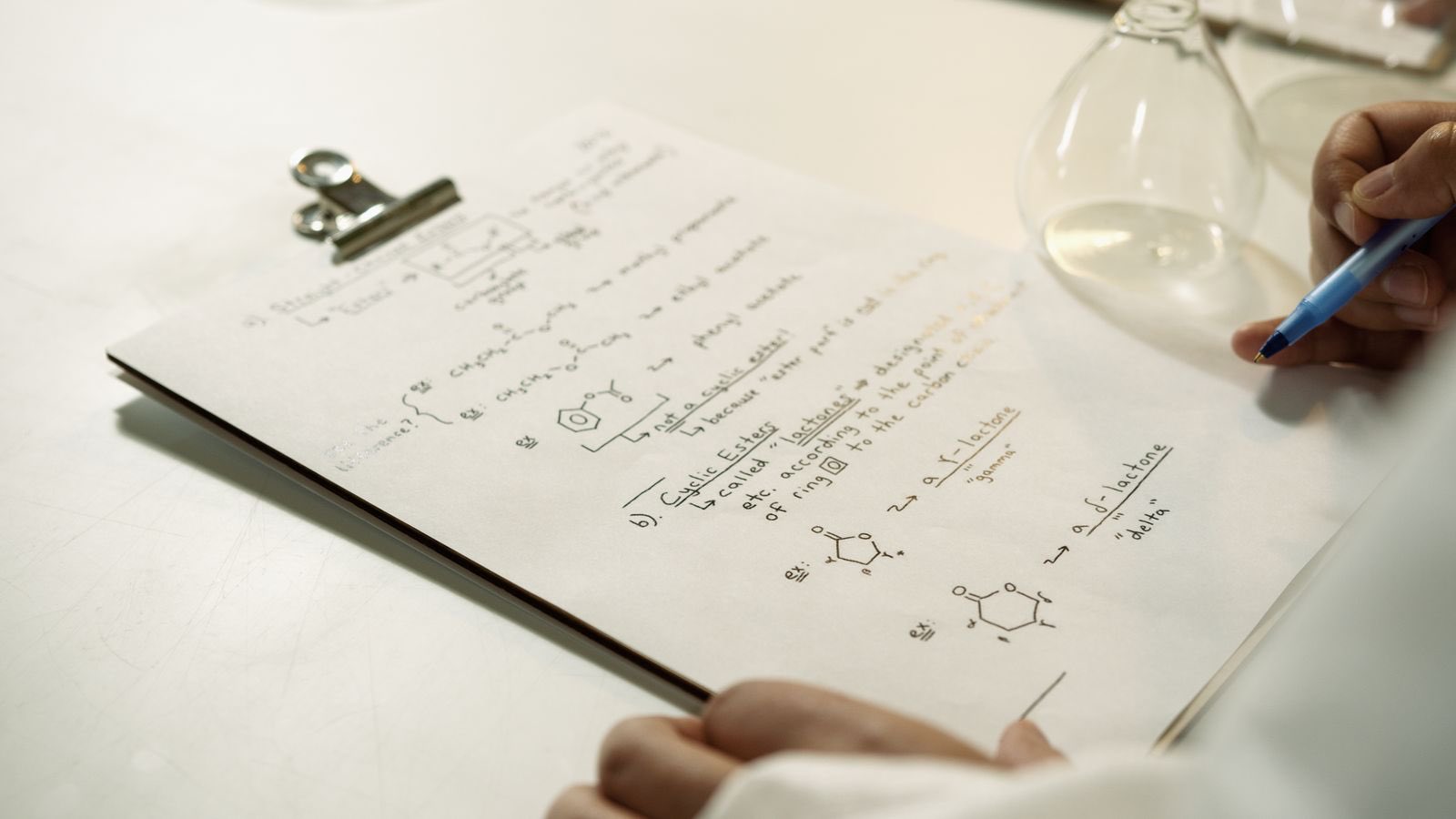
Most process development work fails for the same reason: someone fell in love with a route before finding out what it would cost at scale. A synthesis that gives 85% yield on 200 milligrams in a round-bottom flask can be commercially hopeless at fifty kilograms, and the reasons usually have nothing to do with the chemistry itself.
This is how we approach process development for specialty chemicals, and what we have learned about doing it in the right order.
Start with the constraint, not the chemistry
Before any literature search, we want to know what the finished process has to satisfy. Is the binding constraint cost per kilogram, or is it a purity specification your customer will audit? Is there a regulatory filing that fixes the impurity profile? Is there an existing plant with existing equipment that the process has to fit inside?
These answers change which route is correct. A client who needs 200 kilograms a year to a 99.5% specification, on equipment they already own, has a genuinely different problem from a client who needs five kilograms of the same molecule as fast as possible for a toxicology study. Running the same development programme for both is how budgets get wasted.
Route scouting: cast wide, then cut hard
Scouting begins in the literature, but published routes are written to demonstrate that something is possible, not that it is practical. A paper reporting a 92% yield may be using a reagent that costs forty thousand rupees a gram, or a chromatographic purification that no one will run at scale, or a catalyst that is only available from one supplier in one country.
We list every plausible route, then score each one against the constraints established at the start. The questions that eliminate routes fastest are usually commercial rather than chemical:
- Are all the starting materials available at the volume and price the economics require, from more than one supplier?
- Does any step need equipment we do not have and the client does not have?
- How many isolation steps does the route contain? Each isolation costs yield, time, and solvent.
- Are there safety or handling issues that get materially worse with scale, such as an exotherm that a laboratory flask absorbs harmlessly?
- Does the route generate a waste stream that is expensive or awkward to treat?
Three or four routes usually survive this filter. Those are the ones worth putting in a flask.
Feasibility: buy information, not certainty
A feasibility study is not a small version of the full programme. Its purpose is to buy the specific information that would change the decision, as cheaply as possible.
For a route with an uncertain key step, that might mean running only that step, on purchased intermediate, to see whether it works at all. For a route where the chemistry is well precedented but the purification is the risk, it means taking crude material through the isolation to see what actually crystallises out. The point is to attack the largest unknown first, so that if the route is going to fail, it fails in week two rather than month five.
We report feasibility results plainly, including negative ones. A study that establishes a route will not work has done its job, and it has done it for a fraction of what discovering the same thing during scale-up would have cost.
Optimisation: pick the variable you are optimising
Once a route is chosen, optimisation begins. The mistake here is optimising everything at once, which usually means optimising yield because yield is the number everyone recognises.
Yield matters, but it is one term in a larger equation. A step that goes from 78% to 84% yield has improved by six points. If reaching that required a threefold increase in an expensive reagent, doubled the reaction time, or introduced a chromatography that was not there before, the process has become worse while the headline number improved.
The variables worth holding in view together:
Yield and throughput. Not just how much product per batch, but how much product per reactor per day. A slightly lower-yielding reaction that runs in four hours instead of eighteen may be the better process.
Cost of goods. Raw materials, solvent, catalyst, and their recovery. Solvent volume in particular tends to be underweighted at bench scale, where it is cheap and invisible, and dominant at plant scale, where it must be bought, handled, and disposed of.
Impurity profile. Which impurities form, at what level, and whether they are removed by the isolation you intend to use. It is far better to design an impurity out of a reaction than to design a purification to remove it.
Robustness. How much do the results move when temperature drifts by five degrees, or an addition takes forty minutes instead of twenty? A process that only works inside a narrow window will not survive contact with a plant.
Waste and treatment. What leaves the process that is not product, and what it costs to deal with. This is increasingly a commercial question rather than only an environmental one.
Document as you go, not at the end
The deliverable at the end of a development programme is not a bottle of material. It is the ability to make that material again, reliably, somewhere else. That requires records written during the work: what was charged, at what rate, at what temperature, what was observed, and what the analysis showed.
We have taken over programmes where the previous work was technically sound but effectively unusable, because the documentation was thin enough that no one could reproduce it. The chemistry had been done. The process had not been captured.
What a good outcome looks like
At the end, you should have a route you understand, defined in enough detail to run somewhere else, with an impurity profile you can predict, an economics model that survives contact with real supplier quotations, and a written record that lets a competent chemist repeat it without calling anyone.
That is more work than making the compound once. It is also the difference between a laboratory result and a process.
If you have a molecule and a constraint you cannot get past, we are glad to look at it. An honest opinion on feasibility costs nothing and takes about a day.
Written by
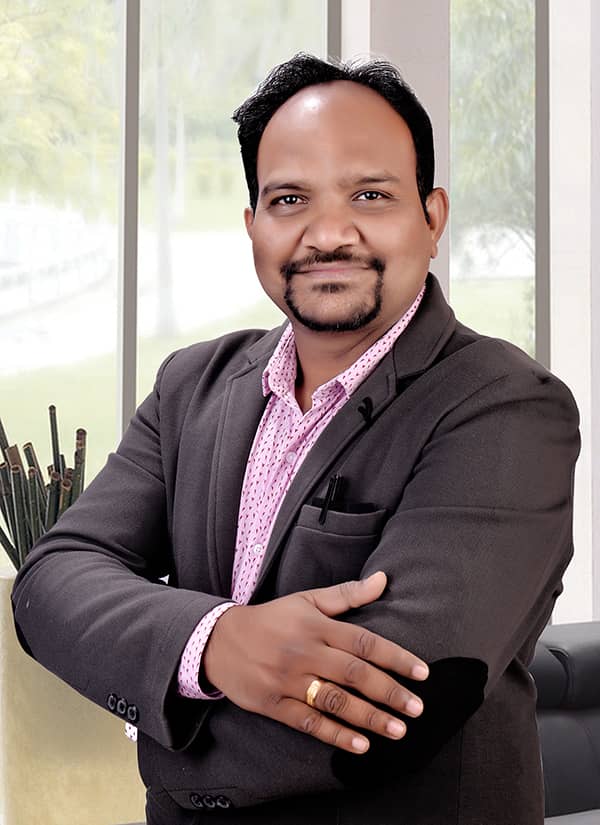
Dr. Vaibhav R. Acham
Founder & Managing Director
Dr. Acham holds a Ph.D. in Chemistry with expertise in heterogeneous catalyst development and application, having researched at CSIR-National Chemical Laboratory in Pune and Humboldt University in Berlin. He brings over fifteen years of industrial R&D experience across specialty chemicals, pyridine chemistry, and food-safety analysis, spanning laboratory establishment, catalyst development, and process scale-up.