WhatsApp

Holding Microbial Load Down in a Recirculating Process Water Loop
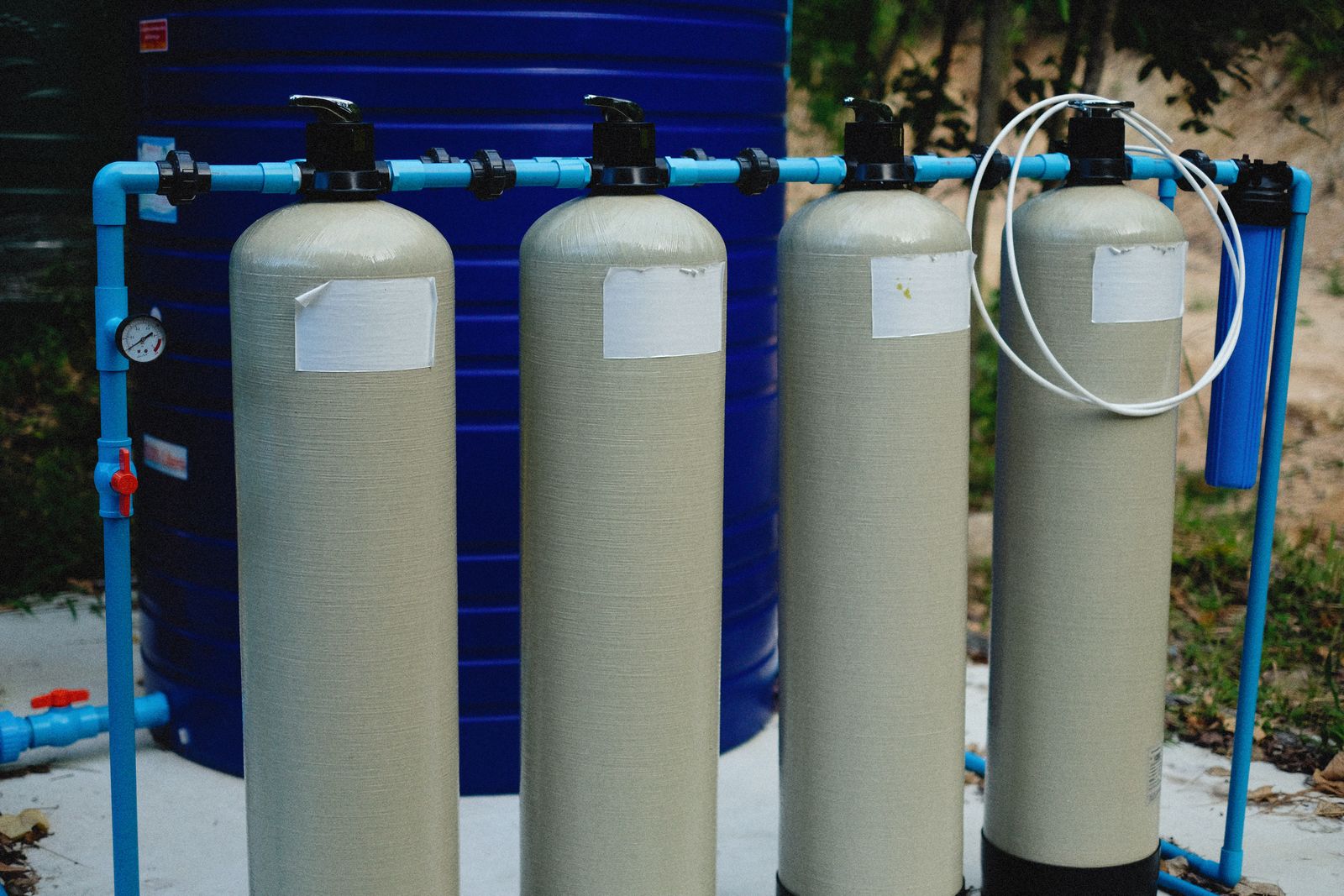
This is one of our own development programmes rather than a client engagement, so it can be described in full. It sits behind several of the water treatment and bio-nutrient formulations we supply, and the reasoning is more useful than the product list.
A loop is a bioreactor you did not design
Recirculating water systems appear everywhere: cooling circuits, process rinse loops, hydroponic nutrient lines, and utility water in a plant. They share a set of conditions that happen to be excellent for microbial growth. The water is warm. It never dries out. It carries some organic load, either from the process or from the additives. And it presents a very large internal surface area in the form of pipe walls, tank floors, heat exchanger plates and dead legs.
Given those conditions, an established population is the default outcome rather than a fault. The engineering question is not how to keep a loop sterile, because that is not achievable in an industrial setting. It is how to hold the population low enough and stable enough that it does not foul surfaces, degrade the additives, or contaminate the product.
The measurement is usually wrong before anything else is
The first thing the programme changed was what we measured.
The standard practice is to draw a sample from a convenient tap and put it on a plate. That gives a planktonic count: the organisms floating freely in the bulk water. It is easy, it is quick, and in a loop with an established biofilm it can be reassuringly low while the actual problem is untouched.
The great majority of the biomass in a mature loop is not in the water. It is attached to surfaces, inside a polysaccharide matrix it secreted itself, at the pipe wall where flow is slowest. That matrix is a diffusion barrier, which is why a biocide dose calculated against a free-floating population underperforms so badly against an attached one, often by more than an order of magnitude.
So the loop can pass its water test on Monday, shed a section of biofilm on Tuesday, and fail spectacularly on Wednesday, with nothing having changed in the dosing.
We moved to sampling surfaces rather than only water: swabs from accessible internals during shutdown, and coupons left in the flow and withdrawn for counting. The numbers were less comfortable and considerably more useful.
Where the population actually lives
Three locations account for most of it, and all three are the places nobody looks.
Dead legs, meaning capped branches, out-of-service spurs and instrument tappings, hold water that never moves. They are effectively incubators plumbed into the system, seeding the rest of it continuously.
Low-flow sections, particularly oversized pipe runs installed for a future expansion that never happened, are the same problem in slower form.
And any warm surface with a nutrient supply: the underside of a tank lid where condensate collects, filter housings, and the sump.
A dosing regime is frequently blamed for a failure that is really a piping geometry problem. Removing a dead leg often does more than raising a biocide concentration, and costs less.
The approach to control
Four elements, and the order matters.
- Fix the geometry first. Cut out dead legs where it is physically possible. Where a branch has to stay, put it on a flush routine and record it. No chemical programme compensates for a permanent reservoir.
- Clean before dosing. Adding an oxidant to an established biofilm consumes the oxidant against the matrix and leaves the organisms underneath. A system with existing fouling needs a cleaning stage, with dispersant and enough shear to lift the film, before a maintenance dose means anything.
- Choose the oxidant for the system rather than for the price. Peracetic acid decomposes to acetic acid and oxygen, leaves no persistent residue, and holds its activity better than chlorine-based products in the presence of organic load, which matters where the loop feeds anything sensitive. Where a persistent residual is needed instead, that is a different choice with different consequences. The wrong question is which is strongest; the right one is what the loop tolerates and what the downstream process tolerates.
- Dose to a measured residual, not to a schedule. Demand varies with temperature, organic load and how recently the system was cleaned. A fixed weekly dose is either wasteful or insufficient, and usually both at different times of the year.
Why the oxidant keeps disappearing
The single most common complaint on a recirculating system is that the biocide is gone before the next dose is due.
That is almost always correct and almost never a product fault. An oxidant is consumed by everything oxidisable in the loop, and the biofilm is only one item on that list. Organic additives, dissolved metals, corrosion products and process carryover all take their share first. This is the same mechanism we described in the context of a hydroponic root zone, where an oxidiser has to survive long enough in a nutrient-bearing recirculating environment to do anything useful.
The consequence for control is direct. What matters is not the dose applied but the residual maintained, and the only way to know the difference is to measure it at the far end of the loop rather than at the dosing point.
The outcome
The programme produced a control approach we now apply generally, and it informs the water treatment chemistry and the bio-nutrient blends we supply. We have not published a log reduction figure. Reduction depends so heavily on the starting condition of a given system that a number from one loop would not transfer to another, and quoting one would suggest a generality the data does not support.
What the programme taught us
The first lesson is that microbiological control is a plumbing problem at least as often as it is a chemistry problem, and the plumbing is cheaper to fix.
The second is that the measurement has to match the question. A plate count from a tap answers a question about the water. If the problem is fouling, the question is about the surface, and only a surface sample answers it.
Water and chemical analysis, microbiological testing, and formulation development for water treatment are things we do, and the products behind this programme are in our catalogue. If you have a loop that fails intermittently and unpredictably, the useful first step is not a stronger biocide. It is a walk along the line with a drawing, looking for the branches nobody uses.
Written by

Agraja Dharmarao
Director
Agraja Dharmarao leads client engagement and research strategy at ChemEngg Research, covering proposals, research collaborations, and the technical direction of both industrial and academic projects. She is a microbiologist by training and came to the company from laboratory operations management, where she oversaw analytical and microbiological testing and wrote the SOPs and quality protocols behind it. Three years in clinical research operations before that is where the documentation discipline comes from.