WhatsApp

Choosing a Catalyst: Heterogeneous, Homogeneous, and What Actually Decides It
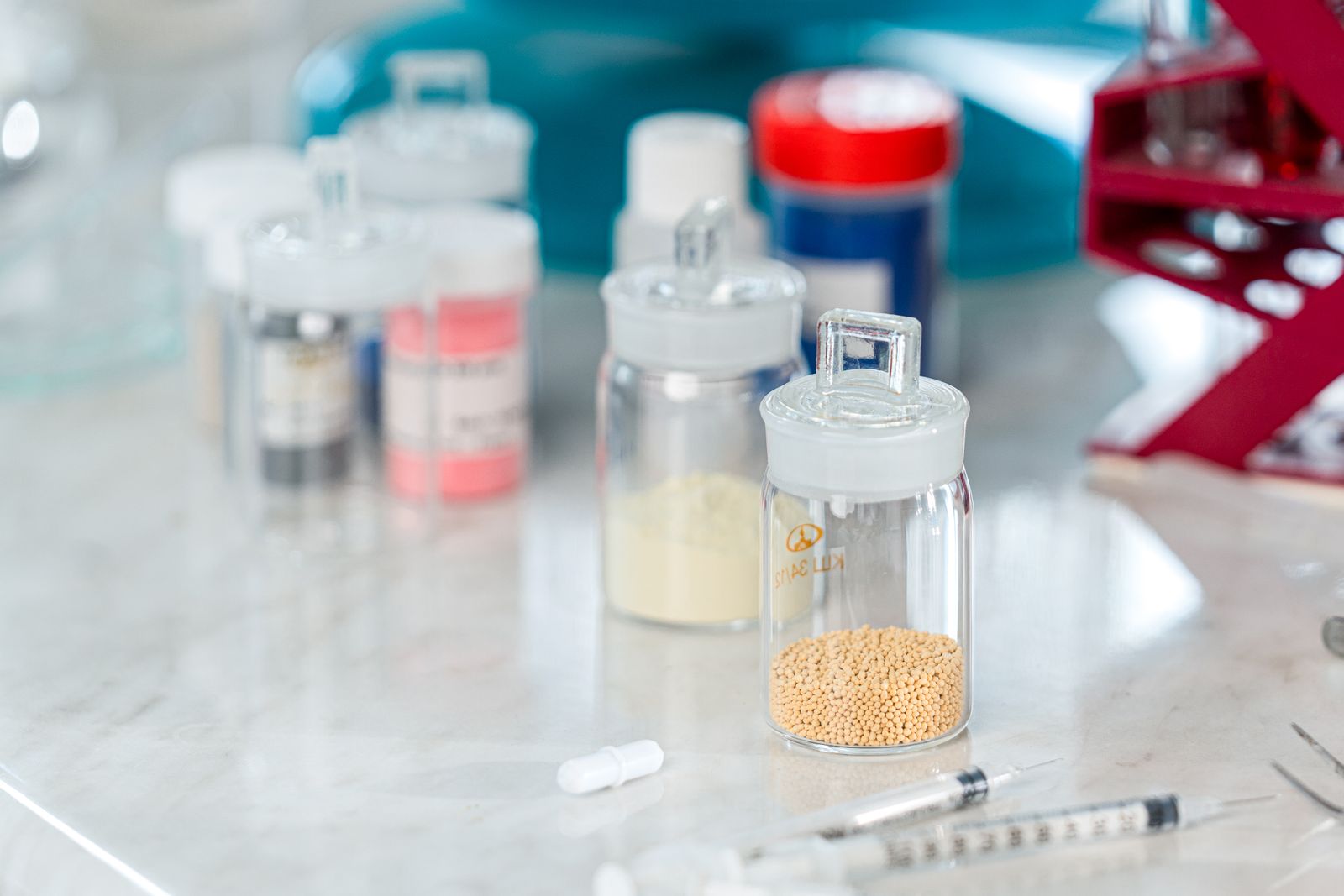
Ask which catalyst is best for a reaction and you will get an answer about activity. Turnover frequency, conversion at two hours, the number in the paper. It is the wrong first question, and it is the reason a great many promising catalytic steps never reach a plant.
A catalyst is not chosen on how fast it works. It is chosen on how cleanly it works, how you get it back out, what it costs when you cannot, and how it behaves once it has been used a few times. Activity is necessary. It is almost never the constraint.
The three properties that compete
Every catalyst decision is a trade between activity, selectivity, and separability, and improving one usually costs you another.
Activity determines reaction time and therefore reactor occupancy. It matters commercially, but a reaction that takes six hours instead of two is an inconvenience. A reaction that produces the wrong isomer is a failure.
Selectivity determines what you have to purify away. Every point of selectivity lost becomes an impurity that has to be removed, which costs yield in the isolation, adds a step, or forces a specification conversation with your customer. It is far cheaper to design an impurity out of the reaction than to design a purification to remove it.
Separability determines whether the catalyst is a consumable or an asset. This is the property that most often decides the choice at scale, and the one most often deferred at the bench because a bench chemist can always filter through a plug of silica.
Homogeneous: better control, harder exit
A homogeneous catalyst is in solution with everything else. Every metal centre is accessible, the environment around it is uniform, and the ligand can be tuned deliberately to steer selectivity. For asymmetric chemistry and for demanding couplings, this control is not a luxury; it is the only way the transformation happens at all.
The difficulty is on the way out. The catalyst leaves the reactor with the product, which means:
- Metal has to be removed to whatever specification the downstream user demands, and for a pharmaceutical intermediate that specification is measured in parts per million.
- Recovery of a precious metal is a separate development problem, with its own losses, and it is often the difference between a process that works economically and one that does not.
- Ligands are frequently more expensive than the metal, and they are usually not recovered at all.
If you are working with palladium, rhodium, or ruthenium, the honest question at the start is not whether the coupling works. It is what the residual metal specification will be and how you intend to meet it.
Heterogeneous: easier exit, harder design
A heterogeneous catalyst is a solid in a liquid or a gas. It filters out, it can often be reused, and the metal loss per batch can be small enough to ignore. That is a large commercial advantage, and it is why so much industrial chemistry ended up heterogeneous even where a homogeneous version performs better in a flask.
The cost is control. The reaction now happens on a surface, which means mass transfer to that surface becomes part of the rate, pore diffusion can limit what reaches the active sites, and the active sites themselves are not identical. A support that changes the acidity around the metal changes the selectivity, sometimes dramatically, and not always in the direction the literature predicts for a similar system.
This is why heterogeneous catalyst work is empirical in a way homogeneous work often is not. The variables that matter, metal loading, support, calcination temperature, particle size, and pretreatment, interact, and screening them is a real programme rather than a week of flasks.
Solid acids and the waste stream nobody costed
One of the most useful substitutions available to a specialty chemicals plant is replacing a mineral acid with a solid acid catalyst.
A step run on sulphuric acid or aluminium chloride works, and it has worked for decades. What it also does is generate a salt waste stream on quench, consume the acid stoichiometrically rather than catalytically, and put a corrosive liquid into the plant that dictates materials of construction. None of that appears in the yield figure. All of it appears in the effluent treatment cost and the maintenance schedule.
Solid acids, whether zeolites, supported heteropolyacids, or functionalised silicas, change that arithmetic. The acid stays in the vessel, filters out, and can be regenerated. The neutralisation salt disappears because there was nothing to neutralise. Conversion is often lower per pass, and that is a genuine trade, but a lower conversion with recycle and no effluent burden frequently wins once the whole process is costed rather than the reaction alone.
It is not a substitution that works everywhere. Steric demands can rule out a zeolite pore, and a reaction requiring a strongly coordinating Lewis acid may have no solid equivalent. But it is worth testing before accepting the mineral acid as fixed.
Catalysts fail in four ways
A catalyst that performs on its first run and disappoints on its fifth has not failed randomly. It has deactivated by one of four mechanisms, and each looks different in the data.
Poisoning. Something binds the active site and does not leave. Sulphur and nitrogen compounds are the usual culprits, and they are often introduced by a raw material rather than the reaction. Activity falls fast and does not recover on washing. The fix is almost always upstream, in feed purification.
Coking or fouling. Heavy organic residues build on the surface and block access. Activity falls gradually, and a calcination or a controlled burn restores it. If it comes back, this was your mechanism.
Sintering. Metal particles grow and coalesce at temperature, so the same mass of metal presents far less surface. Activity falls and nothing recovers it, because the change is physical and permanent. Surface area measurement before and after tells you.
Leaching. The active species dissolves off the support and into the product. This one is treacherous, because for a while the reaction still works, run by the dissolved metal rather than the solid. You believe you have a heterogeneous process. Your product analysis will eventually tell you otherwise. A hot filtration test, removing the solid mid-reaction and seeing whether conversion continues, settles it in an afternoon.
The characterisation that changes a decision
Catalyst characterisation can absorb unlimited time. The techniques worth running are the ones whose result would change what you do next.
- X-ray diffraction identifies the crystalline phase and, through peak broadening, indicates crystallite size. It tells you whether you made the material you intended and whether it survived the run.
- Surface area and pore structure set how much of the catalyst the substrate can actually reach. A high metal loading on a low-area support is often wasted metal.
- Acidity measurement matters for any acid-catalysed step, because both the strength and the type of site, Bronsted or Lewis, govern selectivity.
- Elemental analysis of the product, not the catalyst, is what proves leaching and what your customer will ask about.
Running these before and after a campaign is what turns "the catalyst got worse" into a specific mechanism with a specific fix.
The sequence that works
Establish the selectivity and metal specification the product must meet. Decide from that whether separation is a hard constraint, because if it is, the homogeneous options are already limited. Screen a small, deliberately varied set rather than a large similar one. Test reuse early, at least three cycles, since a first run tells you very little. Characterise the material that disappointed you rather than moving straight to the next candidate.
That last habit is the one that compounds. A catalyst that failed for an understood reason narrows the search. A catalyst that failed for an unknown reason simply costs a week.
Catalyst synthesis, characterisation, functionalisation, and testing are a core part of what we do, including solid acid catalysis for steps currently running on mineral acids. If you have a step whose selectivity or metal specification you cannot get past, that is a good conversation to start early.
Written by

Dr. Mohan K. Dongare
Scientific Advisor
Dr. Dongare advises ChemEngg Research on catalyst selection, characterisation, and the route from a laboratory catalytic result to a process that holds at scale. He is a catalysis scientist from CSIR-National Chemical Laboratory in Pune, where he worked in the Catalysis and Inorganic Chemistry Division on heterogeneous and solid acid catalyst systems, and is a named inventor on solid acid catalyst patents including the synthesis of lactate esters from lactic acid.